We’re Moving House

We’re Moving HouseWe're Moving House by Mick Jackson, Rashin Kheiriyeh
Published by Candlewick Press ISBN: 1536238929
Pages: 32
Genres: Emotions & Feelings, Humor, Realistic Fiction
Format: Picture Book Fiction
Source: MSL Book Review
Goodreads
four-stars

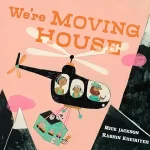
When a little boy learns that his family will be moving house, he’s excited because he thinks that their house will be hoisted up by cranes and moved to the new location.  He becomes fretful when he learns that he is moving to a new house but his old house is not moving with him. Then he realizes that all his special things will be moving with him so he is not so anxious. While the child’s anxiety about moving is relatable, the emotional resolution seems rushed. Still with the whimsical depiction of moving the house,  author Mick Jackson and illustrator Rashin Kheiriyeh have created an imaginative and touching story that will be a valuable resource for parents and young children who will be facing a move to a new house.

Barb Rehmeyer, Liberty Library

four-stars

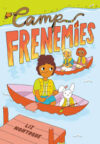
Camp Frenemies

Camp FrenemiesCamp Frenemies by Liz Montague
ISBN: 0593806239
Genres: Realistic Fiction
Format: Graphic Novel
Goodreads
four-stars

In this graphic novel, Beatrice does not want to go to camp and only agrees when her dad tells her she never has to go again if she can stick it out for one week. Bea is miserable. Her cabinmate Virginia teases her relentlessly about her stuffies. Bea carries her rabbit with her everywhere and talks to her stuffies. Not all the campers are mean though. Owen is kind and defends Bea. Bea finds herself developing her first crush! When Bea and Virginia’s cabinmate goes missing, they have to work together to find her. In the process, all three cabinmates discover they each have things they are working through – divorcing parents, not making the soccer team, not fitting in in middle school – and start to make plans for the following summer. The story is simple and the illustrations perfectly accompany the story. Readers will especially enjoy the pages where Bea and her stuffed rabbit Roger have animated conversations. This is a perfect graphic novel about friendship and finding your place for upper elementary/middle grade readers.

Reviewed by Karen Sandlin Silverman, Mt. Ararat Middle School, Topsham

four-stars

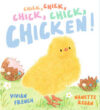
Chick, Chick, Chick, Chick, Chicken!

Chick, Chick, Chick, Chick, Chicken!Chick, Chick, Chick, Chick, Chicken! by Nanette Regan, Vivian French
ISBN: 1536239054
Genres: Animals
Format: Picture Book Fiction
Source: MSL Book Review
Goodreads
five-stars
This title is eggs-cellent and met all my ex-peck-tations for a story about chickens. Okay, I’ll stop now. Vivian French has created a picture book that deftly combines a simple narrative about Juliet and her younger brother Bob visiting their grandfather at his suburban oasis with concise facts about chickens that will have readers clucking with joy. Sorry, can’t stop.

Juliet is a young girl, about seven-years old, who is familiar with her grandfather’s chickens. As they stroll about the yard, much information about chickens is conveyed in the dialogue between the characters, in a conversational tone that never appears artificial.

Each page contains text, charming mixed media illustrations by Nanette Regan, and a factoid related to the narrative. The facts are in boldface capital letters and a very different typeface from the narrative, so the reader can easily discern the story from the information. The layout and design of the pages allows the story to flow. 

This is an ideal book for audiences between ages 4-8. It works well as a read-aloud for younger children and readers will enjoy gaining knowledge about chickens. Try it in September for National Poultry Month or anytime an eggs-traordinarily good read-aloud is needed. Stopping now.  

 Highly recommended for school and public libraries.

 Deanna Contrino, SLMS/MILS
K-2 School Resource Librarian, Scarborough Schools

five-stars

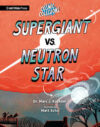
Cosmic Collisions: Supergiant vs. Neutron Star

Cosmic Collisions: Supergiant vs. Neutron StarCosmic Collisions: Supergiant vs. Neutron Star by Marc J. Kuchner, Matt Schu
ISBN: 1536227366
Format: Nonfiction
Source: MSL Book Review
Goodreads
four-stars
“Hold on folks – I’m getting some important news! What?? No! It can’t be! This just in. One of our fighters has EXPLODED! I repeat . . .  EXPLODED!”

This brief and engaging astronomy book is the second in the Cosmic Collisions MIT Kids Press series by Dr. Marc J. Kuchner, an astrophysicist. The tone is that of a boxing match with a “host” addressing the reader directly, asking the reader to guess what happens next and delivering information about this astronomical head-to-head battle in a dramatic tone, similar to that of a ringside announcer.

The language is clear and information is delivered in a number of ways: through small, humorous bites: “Kids: do not stick your finger inside a red supergiant!”; relatable comparisons; inserts that offer more detailed explanations and definitions; and illustrations that bring it all together in a comic book graphic style.  Best for those with some previous knowledge of astronomy beyond the solar system.  Readers who are curious about astronomy and want to dive deep into the subject will love this book.

Recommended for school and public libraries where astronomy nonfiction is popular.

 Deanna Contrino, SLMS/MILS
K-2 School Resource Librarian, Scarborough Schools

four-stars

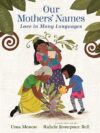
Our Mothers’ Names: Love in Many Languages

Our Mothers’ Names: Love in Many LanguagesOur Mothers' Names: Love in Many Languages by Rahele Jomepour Bell, Uma Menon
ISBN: 153622250X
Genres: Family
Format: Picture Book Fiction
Goodreads
four-stars
“Every morning when I wake up, the first person to greet me is my mother.
‘Good morning, child,’ she says when I open my eyes . . . .
‘Good morning, Amma,’ I reply rolling out of bed.”

And so begins Uma Menon’s narrative, told in first person by an unnamed young girl, who introduces the reader to the women in her family, and explains that Amma is the word for mother in Malayalam, a language spoken primarily in Kerala, India. The narration takes the conceptual idea that there are many languages, and therefore, many ways  to address our mothers, and makes it concrete by introducing some of those names throughout the book, through the narrator’s friends’ names for their mothers in their mother tongues, as they participate in all kinds of creative activities.

Rahele Jomepour Bell’s attractive mixed media collage illustrations with thematic reinforcement of language as a living thing, enhance what otherwise might become a laundry list, instead of fully realized story. In the back matter is an interesting collection of facts about languages and multilingualism, and the end pages display names for mothers in many different languages. 

This could be a beautiful read-aloud for Mother’s Day or for International Mother Tongue Day, celebrated on February 21. Those doing the reading aloud will want to prepare a pronunciation guide beforehand (the book doesn’t provide one). Young readers will enjoy this lovely story that sends the message that multilingualism is a super power, and that learning other languages and teaching our love languages are valuable gifts to share. 

Recommended for school and public libraries.

Deanna Contrino, SLMS/MILS
K-2 School Resource Librarian, Scarborough Schools

four-stars

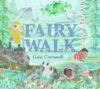
Fairy Walk

Fairy WalkFairy Walk by Gaia Cornwall
Published by Candlewick Press ISBN: 1536230715
Genres: Adventure, Nature
Format: Picture Book Fiction
Source: MSL Book Review
Goodreads
five-stars
At the start of this delightful romp, three children of different ages, genders, and skin tones, are pulling on rain boots, packing provisions and preparing for a day in the woods that includes snacks, binoculars, and a magnifying glass. There will be some frisson as readers realize that the adults are staying home and this trio of friends (and the family dog) are taking a rainy-day outing, unaccompanied by grown-ups, to look for fairies in the woods.

Cornwall employs active, rhythmic, onomatopoeic prose  that engages all the senses (“Wriggle, tickle quick! Slip.”) as the characters explore the woods. They look high and low, noticing many of the gifts of nature (salamanders under logs, rolypoly bugs under moss) as they search without luck, for the illusive fairies. Their visible frustration at not finding the fairies will provide entertainment for readers who have been spotting fairies hiding in plain sight (in a robin’s nest, under a mushroom . . . . ), all along and all around the children. Although the children never spot the fairies, the real treasure becomes all the wonders they do notice (wildflowers, butterflies, babbling brooks) on their excursion.

Cornwall’s illustrations are colorful, clever and cunningly sweet without being cloying. She has used colored pencil, watercolor and collage to create a nature motif that follows the characters from inside (floral wallpaper print) to the outside. The outdoors is rendered in gentle pastels while the children are wearing vibrant (mostly primary) colors. 

The narrative is geared toward younger children but anyone enchanted with the idea of fairies will enjoy this playful story that celebrates the wonders of being outside. It would be an excellent read-aloud for any kind of fairy programming, especially a fairy walk, or fairy house building. 

Highly recommended for school and public libraries.

 Deanna Contrino, SLMS/MILS
K-2 School Resource Librarian, Scarborough Schools
five-stars

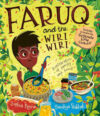
Faruq and the Wiri Wiri

Faruq and the Wiri WiriFaruq and the Wiri Wiri: A Celebration of Family and Food by Sandhya Prabhat, Sophia Payne
ISBN: 1536241229
Genres: Family
Format: Picture Book Fiction
Source: MSL Book Review
Goodreads
five-stars
A young boy curious about cooking and eager to help create the dishes he sees his ajee making every day for the family meals, finally gets his chance when a friendly neighbor invites him into her kitchen, and into the wonderful world of cooking food with love for family. Ajee discourages Faruq from taking an active role in the kitchen and advises him to stay away from the wiri wiri peppers in the garden. Luckily, Faruq’s elderly neighbor welcomes Faruq into her kitchen and teaches him through hands-on learning.

Faruq is an inquisitive and attentive student, and Mrs. Joseph is a generous teacher. She lets him know that it’s okay to make mistakes, as Faruq masters how to make Indo-Guyanese foods such as lime cookies, cook-up rice, and wiri wiri soup. We learn along with Faruq, that wiri wiri are peppers called “cherry bombs” for their appearance and heat. Faruq’s skills and desire culminate in the climax of the book, as he creates food to make his grandmother feel better, and feeds his family.

The story and illustrations work well together to create an attractive environment around cooking in an Indo-Guyanese kitchen. The vibrant colors and collage-appearing illustrations of characters,  enjoying themselves in the kitchen, cooking with traditional ingredients will draw the readers in, and invite curiosity about the food and culture.

This simple story about doing what makes you happy, no matter what conventional gender roles dictate, welcomes the reader into Indo-Guyanese kitchens and makes a great read-aloud. Many children will make a connection between Faruq’s desire to do more than simply watch his grandmother cook, and enjoy the process as Faruq not only learns to cook, but becomes the hero of the story as he feeds his family delicious food with love.

Highly recommended for school and public libraries.

Deanna Contrino, SLMS/MILS
K-2 School Resource Librarian, Scarborough Schools

five-stars

Bob the Boo-Boo

Bob the Boo-BooBob the Boo-Boo by Mélina Schoenborn, Sandra Dumais
ISBN: 1525313835
Format: Picture Book Fiction
Source: MSL Book Review
Goodreads
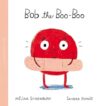
If you’re a boo-boo without a home, what do you do? In this original story, the main character is a friendly, bright red circle of a boo-boo named Bob who carries his belongings in a bindle. All boo-boos need a place to settle down and Bob is looking for a likely location (a girl’s skinned elbow, an old man’s stubbed toe) but no one wants to invite him to be their boo-boo until he implores a little boy who’s fallen off his bike if he can be the little boy’s boo-boo. Bob goes hoe on the little boy’s knee and is cared for. The two go everywhere together for a time until, inevitably, Bob must leave (as all boo-boos eventually do) . 

There are many humorous moments in the story, even though Bob’s desperate need for a home feels real. The whimsical illustrations by Sandra Dumais support both these ideas, and children will love the many different band-aid designs depicted. This story is quirky with a message that  resonates: There’s a place for everyone, even boo-boos. 

Recommended for school and public libraries as an additional purchase where unconventional stories are well-received.

Deanna Contrino, SLMS/MILS
K-2 School Resource Librarian, Scarborough Schools

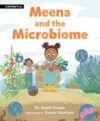
Meena and the Microbiome

Meena and the MicrobiomeMeena and the Microbiome by Majdi Osman, Teresa Martínez
ISBN: 1536227595
Genres: STEM
Format: Picture Book Fiction
Source: MSL Book Review
Goodreads
three-stars
This picture book narrative from MIT Kids Press explains the world of microbes and how they work in the world around us, through about a curious young girl named Meena who asks a *lot* of questions, and her scientist mom, who has most of the answers.  As they work in their backyard garden after a rainstorm, information about microbiomes and microbes is conveyed to the reader through Meena and her mom’s conversation about what is happening all around them in the backyard garden. 

As they plant seeds, harvest vegetables, compost weeds, wash hands, and eat lunch, Meena’s mom explains what microbes are and the many different, important jobs they do, inside and outside our bodies.Simple whimsical illustrations help move the story along; the perspective of the illustrations moves from scenes in the garden to depictions of the microscopic world microbes occupy. Microbes are anthropomorphized  in the narration as Meena’s mom describes the microbiome as a “community . . . like a city with millions of people living together”, and in the illustrations through cartoonish features that young readers will find compelling. The author is a researcher in the field of microbiomes and the role they play in nutrition.

Science-minded children who enjoy a little bit of an “ick” factor (microbes aid in digestion, and the word “poop” is used – always a crowd pleaser) will find that this story generates curiosity around the tiny things around us that have a big impact on our everyday lives. 

Recommended as an additional purchase for school and public libraries.

 Deanna Contrino, SLMS/MILS
K-2 School Resource Librarian, Scarborough Schools

three-stars

Growing Green: A First Book of Gardening

Growing Green: A First Book of GardeningGrowing Green: A First Book of Gardening by Candlewick Press, Daniela Sosa
Published by Candlewick Press ISBN: 1536235512
Genres: Non-Fiction, STEM
Format: Picture Book Nonfiction
Source: MSL Book Review
Goodreads
four-stars
This interactive picture book walks the reader through fifteen gardening projects broken down into simple, step-by-step instructions, in language accessible to young readers ages 5-8. With a table of contents and a Getting Started page that encourages gardeners of all abilities and any amount of planting space to dive into inviting projects such as Strawberries in Rain Boots and Tin Can Herb Garden. This section also details the basic tools and supplies needed.

Each project has a two-page spread that includes a headnote with suggestions on when and where to plant; a list of materials; infographic about season, harvest, and the proper environment, and detailed steps, taking the project from preparation to harvest.  Most projects also have a “Did you know?” blurb that includes a fun fact about the plant – its history, its nutritional value, etc. All the projects are for edible plants, which adds to the appeal for young gardeners and their parents.  

The illustrations are attractive and playful mixed-media collage. They accompany each step, which are seen as progressing along a vine on numbered leaves. Originally published in the U.K., there are a few words (“cressheads” and “peat-free”, for example) that might be unfamiliar but aren’t distracting. All measurements are given in metric and imperial units. Occasionally, there are instructions with non-specific quantities (a “large” pot), where specifics would be helpful.

Families and classrooms interested in hands-on gardening projects will find this book delightful and engaging. Highly recommended for school and public libraries.

 Deanna Contrino, SLMS/MILS
K-2 School Resource Librarian, Scarborough Schools

four-stars