The Boy, the Troll & the Chalk

The Boy, the Troll & the ChalkThe Boy, the Troll & the Chalk by Anne Booth, David Litchfield
ISBN: 1536243973
Genres: Emotions & Feelings
Format: Picture Book Fiction
Goodreads
three-stars

The Boy, the Troll & the Chalk

Anne Booth. Illustrated by David Litchfield


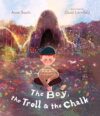
This picture book for ages 3-7 is about a big fierce troll who lived in the cave.
“Leave me alone!” it yelled. And everyone did leave the troll alone, except for a red-headed boy who brought some chalk up to the mouth of the cave and drew a flower with every petal colored in but one. The boy leaves the chalk behind and next day, he finds that the flower has been completed. Day by day, the troll finishes the boy’s drawings, until they each draw self-portraits holding hands. The boy tells the troll that he isn’t a big scary troll at all, but rather a boy just like him. The two boys start drawing together and soon all the other children gather to join in and draw with chalk. Everyone forgets that there was a troll inside the cave. This is a sweet story about patience, friendship, and the power of shared art. Unfortunately, the reader never learns why the “troll” was so isolated and despondent, which detracts from building empathy and understanding.

3 stars

Reviewed by Lindsey Hopkins, Jay-Niles Memorial Library, Jay
three-stars

Punch!:A Story About Kindness

Punch!:A Story About KindnessPunch!: A Story About Kindness – A Funny Picture Book About Empathy and Bullying for Kids (Ages 4-8) by Michael Hall
Published by HarperCollinsChildren’sBooks on 2025
ISBN: 0062866214
Format: Picture Book Fiction
Source: MSL Book Review
Goodreads
four-stars

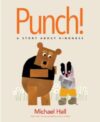
Before the story even begins, readers may find themselves wondering why the author titled  a story about kindness, “Punch!” The inside front cover directs the reader to “look at the pictures very carefully” and notes, “Some words have more than one meaning.” The copyright pages shows Badger and Snaily sharing good times in a  series of snapshots .

Badger, the main character, bursts onto the first page of the story, “looking for trouble”, angry and red in the face. Pulling a wagon carrying among other things, a shovel and pitchfork, he  proceeds to physically hurt Elephant, Bear,  Frog and Moose, without provocation or explanation.

The blocky cut out characters on a white background, allow us to focus on the animals’ facial expressions and the undercurrents of what is left unsaid. The friends are understandably bewildered and make a three-part plan to “teach (Badger) a lesson”.

In Part 1, as Badger digs a hole,  Bear approaches  him with “Punch!” (to drink); in Part 2, Badger smooths a pile of dirt and is surprised by Moose and Frog, who give Badger a “Belt!” and “Sock!” (to wear). Part 3 shows Badger placing flowers on a gravestone for his friend Snaily and Elephant “really let(ting) Badger have it” . . . .  a “Slug!” (to care for). Readers will enjoy the way the story plays with the double meaning of the action words that turn into symbols of tenderness and empathy, even as they feel distress at understanding that Snaily has died.

As Badger accepts the compassion his friends are showing him, and allows them to support him in his grief over losing Snaily, something in him loosens and allows Badger to return the kindness.

This would be a positive  story for families to read together to discuss empathy and an  important life lesson:  sometimes we lash out when we’re in pain and friends can choose to respond in kind, or with kindness.  Punch!may  need an immediate second reading for young readers to synthesize the story’s words with its images and message.

Recommended for public school libraries.

Deanna Contrino, SLMS
K-2 Resource Librarian, Scarborough Schools

four-stars

The Baby who Stayed Awake Forever

The Baby who Stayed Awake ForeverThe Baby Who Stayed Awake Forever by Sandra Salsbury
Published by Doubleday Books for Young Readers ISBN: 0593805879
Format: Picture Book Fiction
Source: MSL Book Review
Goodreads
four-stars

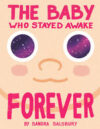
This  funny, relatable story for families with new babies, is perfect for bedtime. Follow along hour to hour as Mom, Dad and big sis try everything to get the baby to sleep, from good night kisses to pacifiers to cuddles. Nothing works.Even Mr. Neighbor wonders if the baby is going to stay awake forever.

Using humor that older siblings and parents will relate to,  the reader is privvy to baby’s thoughts. Her master plan is to stay awake forever, exploring the wonders of the universe, jumping “fifty times in a row. Or one hundred times. Nobody knows, because babies can’t  count.”

The illustrations are playful and alternate through full-page spreads, vignettes, panels and close-ups of Baby and family as she flings binkies, probes Papa’s face, and revels in her nighttime hijinks.  Baby’s eyes are wide and round as saucers as  everyone else’s eyelids get heavier and heavier.

This would be a delightful addition to a public library collection.

Deanna Contrino, SLMS
K-2 Resource Librarian, Scarborough Schools


four-stars

The Beautiful Layers of Me

The Beautiful Layers of MeThe Beautiful Layers of Me by Ruchi Mhasane, Sophia Payne
ISBN: 1536242896
Genres: Cultural / African American, Emotions & Feelings, Family, Realistic Fiction
Format: Picture Book Fiction
Source: MSL Book Review
Goodreads
four-stars

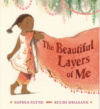
Ameena is so excited, because today is her Auntie’s nikah, or wedding. Because of the special occasion, she is gifted with her first ever salwar kameez, and she loves the soft layers of floaty fabric. But, when her next-door neighbor Emily accidentally compliments Ameena’s “pajamas”, Ameena feels embarrassed and worried. Ameena goes to her room, fidgeting with her outfit, and accidentally picks a hole right through her kameez. Without time to spare, she changes into her favorite dress, only to regret the outfit change when seeing how beautiful her cousin Lisa looked in her matching salwar kameez. Saving the day, Babu repairs Ameena’s kameez right before the ceremony, and Ameena feels proud to wear it, and of her heritage. The illustrations are full of colorful, soft, and flowy layers, just like Ameena’s salwar kameez. This relatable tale would resonate with any child feeling embarrassed about being “different”. The writing also beautifully weaves in words of the Author’s Indo-Caribbean heritage. Recommended for ages 5 to 7 (Kindergarten to 1st grade).

Reviewed by: Jenn Mead, Charlotte Hobbs Memorial Library, Lovell

four-stars

Quentin Blake’s Fantastic Journeys: Fanciful Drawings & Surprising Situations

Quentin Blake’s Fantastic Journeys: Fanciful Drawings & Surprising SituationsQuentin Blake's Fantastic Journeys by Quentin Blake
ISBN: 1536245089
Genres: Arts
Format: Picture Book Fiction
Source: MSL Book Review
Goodreads
four-stars

Join beloved illustrator, Quentin Blake, on a journey through this fun collection of illustrations. The illustrations are grouped into themes such as “Trip Hazards” and “Deliveries from Elsewhere”. While not creating a storyline, this collection of quirky sketches and illustrations is sure to bring delight to readers of all ages. The style of Quentin Blake’s illustrations is also inspirational for artists at all ability levels, demonstrating that you can spark joy, create movement, tell a story, and elicit emotion without being “perfect”. Recommended for ages 7 to 9 (2nd to 4th grade).

Reviewed by: Jenn Mead, Charlotte Hobbs Memorial Library, Lovell

four-stars

So Many Years: A Juneteenth Story

So Many Years: A Juneteenth StorySo Many Years: A Juneteenth Story – A Radiant Picture Book about Black Resilience and Joy for kids (Ages 4-8) by Anne Wynter, Jerome Pumphrey
Published by HarperCollinsChildren’sBooks ISBN: 0063081148
Genres: Cultural / African American, History, Holiday
Format: Picture Book Fiction
Source: MSL Book Review
Goodreads
five-stars

A masterful picture book celebrating the end of slavery in the United States. Anne Wynter and Jerome Pumphrey together have created a joyful celebration of a book that explains why Juneteenth is so important, for everyone, but especially Black Americans.

“How would you dress after so many years of mending your clothes with rags? 

How would you sing after so many years of writing in code? 

How would you eat after so many years of making your meals from scraps?”

There are not many lines in this book, but they are stunningly poetic and powerful. The colors of the acrylic paint brushstrokes are bright and celebratory. The pages do not shy away from the history of enslavement, however they are not too harsh for young readers. A must buy for picture book collections. Ages 4-8.

Recommended for Cream of the Crop

Reviewed by Gia Charles, Patten Free Library, Bath

five-stars

Dream For the Land

Dream For the LandDream for the Land by Laekan Zea Kemp, Leo Espinosa
ISBN: 0593710304
Genres: Animals, Family, Farm Life, Folklore, Realistic Fiction
Format: Picture Book Fiction
Source: MSL Book Review
Goodreads
four-stars

Dream For the Land is a powerful”slice-of-life” moment on a farm in West Texas based on the author’s experience watching climate change create a mega-drought in the land she grew up in. Our main character is an unnamed girl who is chasing the bunnies from the crops and watching them droop from lack of rain. She sees the lines of worry on her Má and Pá’s faces, but they ease up with smiles when they find a little horned toad in the vegetables. She kisses the toad and makes a wish for the land to be as it once was when her grand-grandfather tilled the soil and made it their home.

This is a simple, but poignant book about a family who desperately need rain for their ancestral lands to be rich and fertile again. Almost too-sad for early children’s literature, but it makes up for it with storytelling and sweet illustrations and the fantastical magic wish of the horned toad. There’s a nice Author’s Note in the end pages that explains her connection to the story, and how we can take action for indigenous lands to be protected. For ages 4-8.

Reviewed by Gia Charles, Patten Free Library, Bath

four-stars

Bud Finds Her Gift

Bud Finds Her GiftBud Finds Her Gift by Naoko Stoop, Robin Wall Kimmerer
on September 2, 2025
ISBN: 0063324423
Genres: Cultural / First Nations, Nature, Realistic Fiction
Format: Picture Book Fiction
Source: MSL Book Review
Goodreads
four-stars

Bud Finds Her Gift is a beautiful meditation on what it means to be connected to the Earth. Written by Robin Wall Kimmerer, author of Braiding Sweetgrass, this book is a message to our youngest readers that we need to take the time to notice the special little moments in nature around us. When Bud feels left out, because the older members in her family each have “important things” to do during the day. She goes to her grandmother, Nokomis, who teaches her to find her “important thing” by noticing nature in the woods.

There is a mantra throughout the pages, “Everyone, from the day of their birth, was given a gift to share with the Earth. Being soft and green is what I do best. So I share with the birds to make a warm nest.” Bud notices a Robin pooping in the grass, this adds a bit of humor to the story (and will keep kids engaged) and even remarks on how this is a gift to the Earth to add seeds to the ground. Bud realizes that there’s nothing more important than using our time and energy as a gift to take care of the Earth.

While this is a special and important message, it certainly feels like an author of adult non-fiction is creating a didactic text for younger readers, and children will sense this immediately. The name “Bud” also seems to be an odd name choice for our young girl protagonist. For ages 4-8.

Review by Gia Charles, Patten Free Library, Bath


four-stars

There’s a Dinosaur in Your Book

There’s a Dinosaur in Your BookThere's a Dinosaur in Your Book (Who's In Your Book?) by Dynamo, Tom Fletcher
Published by Random House Children's Books Format: Picture Book Fiction
Source: MSL Book Review
Goodreads
three-stars

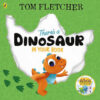
In this interactive picture book from the Who’s in Your Book series, readers are invited to turn the page, say, “Hello, Triceratops!” and other actions to assist Little Dinosaur in learning to do things quietly, so as not to wake up the big dinosaur sleeping somewhere in the book. It is a lighthearted attempt to show preschoolers how to use their inside voices as they play.

Little Dinosaur learns to be a good firend as she helps Tricearatops pick up berries, counts butterflies with Diplodocus, and greets Stegosaurus. Unfortunately, she doesn’t learn much about using her inside voice, and deep-thinking preschoolers may wonder why she’s being asked to use her inside voice when she’s outside.

Inevitably, Big Dinosaur wakes up. Little Dinosaur cajoles Big Dinosaur (who appears to be one of her parents) into a jolly mood with silly faces, dances, and singing along with her little dinosaur friends and the reader.

Readers will enjoy the interactivity on every page and the illustrations are bright and cheerful; the dinosaurs are very cute with wide eyes and friendly smiles.

It’s possible to use this book as a starting point for a discussion about when it’s appropriate to  to use one’s inside or outside voice  and interactive read-alouds actively engaging the reader are always in demand, but there are better options for both. Recommended as an additional purchase where the Who’s in Your Book series is popular.

Deanna Contrino, SLMS
K-2 Resource Librarian, Scarborough Schools

three-stars

Alfred Blooms

Alfred BloomsAlfred Blooms by Carmen Mok, Carrie Kruck
Published by Random House Children's Books ISBN: 0593647602
Format: Picture Book Fiction
Source: MSL Book Review
Goodreads
three-stars

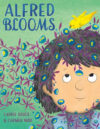
Alfred is a young boy who believes that growing a garden is something of value he can share with people,  like Lulu, who lives at the other end of the street and has “so much to share”. Lulu’s whimsical garden is lavish with outsized blooms and outlandish colors and  filled with children playing together. In comparison,  no matter how hard Alfred tries to grow things in his yard, it remains brown, lifeless and barren. Alfred is despondent but determined to try one more time, picking up a package of wildflower seeds and hoping this will be the ticket.

Through a remarkable series of events, the seeds take root on Alfred, and purple wildflowers begin blooming all over him — in his hair, his nose, the pockets of his clothes. He feels embarrassed and conspicuous, especially as the birds and butterflies begin fluttering around the garden growing on him, but doesn’t let that stop him from his customary Friday meet up with Lulu.

The reader learns that Lulu considers Alfred a good friend who always shares blueberry muffins with her. Lulu is delighted to see Alfred in bloom, and transplants one of his wildflowers to her own garden. In sharing his wildflower with Lulu, Alfred becomes aware of all that he does have to share (with Lulu as well as with pollinators) and the friends enjoy their day together.

It’s a sweet story about learning to value what we have to share, and realizing that it doesn’t have to look like everyone else’s gift. The story may leave the reader with questions about why Alfred is so despondent when he has a good friend in Lulu, or why he doesn’t ask her for help with his garden but the illustrations, done in colored and graphite pencil and gouache include charming details, that may distract from the unanswered questions.

Recommended as an additional purchase for public and school libraries.

Deanna Contrino, SLMS
K-2 Resource Librarian, Scarborough Schools

three-stars