Bud Finds Her Gift

Bud Finds Her GiftBud Finds Her Gift by Naoko Stoop, Robin Wall Kimmerer
on September 2, 2025
ISBN: 0063324423
Genres: Cultural / First Nations, Nature, Realistic Fiction
Format: Picture Book Fiction
Source: MSL Book Review
Goodreads
four-stars

Bud Finds Her Gift is a beautiful meditation on what it means to be connected to the Earth. Written by Robin Wall Kimmerer, author of Braiding Sweetgrass, this book is a message to our youngest readers that we need to take the time to notice the special little moments in nature around us. When Bud feels left out, because the older members in her family each have “important things” to do during the day. She goes to her grandmother, Nokomis, who teaches her to find her “important thing” by noticing nature in the woods.

There is a mantra throughout the pages, “Everyone, from the day of their birth, was given a gift to share with the Earth. Being soft and green is what I do best. So I share with the birds to make a warm nest.” Bud notices a Robin pooping in the grass, this adds a bit of humor to the story (and will keep kids engaged) and even remarks on how this is a gift to the Earth to add seeds to the ground. Bud realizes that there’s nothing more important than using our time and energy as a gift to take care of the Earth.

While this is a special and important message, it certainly feels like an author of adult non-fiction is creating a didactic text for younger readers, and children will sense this immediately. The name “Bud” also seems to be an odd name choice for our young girl protagonist. For ages 4-8.

Review by Gia Charles, Patten Free Library, Bath


four-stars

There’s a Dinosaur in Your Book

There’s a Dinosaur in Your BookThere's a Dinosaur in Your Book (Who's In Your Book?) by Dynamo, Tom Fletcher
Published by Random House Children's Books Format: Picture Book Fiction
Source: MSL Book Review
Goodreads
three-stars

In this interactive picture book from the Who’s in Your Book series, readers are invited to turn the page, say, “Hello, Triceratops!” and other actions to assist Little Dinosaur in learning to do things quietly, so as not to wake up the big dinosaur sleeping somewhere in the book. It is a lighthearted attempt to show preschoolers how to use their inside voices as they play.

Little Dinosaur learns to be a good firend as she helps Tricearatops pick up berries, counts butterflies with Diplodocus, and greets Stegosaurus. Unfortunately, she doesn’t learn much about using her inside voice, and deep-thinking preschoolers may wonder why she’s being asked to use her inside voice when she’s outside.

Inevitably, Big Dinosaur wakes up. Little Dinosaur cajoles Big Dinosaur (who appears to be one of her parents) into a jolly mood with silly faces, dances, and singing along with her little dinosaur friends and the reader.

Readers will enjoy the interactivity on every page and the illustrations are bright and cheerful; the dinosaurs are very cute with wide eyes and friendly smiles.

It’s possible to use this book as a starting point for a discussion about when it’s appropriate to  to use one’s inside or outside voice  and interactive read-alouds actively engaging the reader are always in demand, but there are better options for both. Recommended as an additional purchase where the Who’s in Your Book series is popular.

Deanna Contrino, SLMS
K-2 Resource Librarian, Scarborough Schools

three-stars

Alfred Blooms

Alfred BloomsAlfred Blooms by Carmen Mok, Carrie Kruck
Published by Random House Children's Books ISBN: 0593647602
Format: Picture Book Fiction
Source: MSL Book Review
Goodreads
three-stars

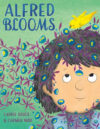
Alfred is a young boy who believes that growing a garden is something of value he can share with people,  like Lulu, who lives at the other end of the street and has “so much to share”. Lulu’s whimsical garden is lavish with outsized blooms and outlandish colors and  filled with children playing together. In comparison,  no matter how hard Alfred tries to grow things in his yard, it remains brown, lifeless and barren. Alfred is despondent but determined to try one more time, picking up a package of wildflower seeds and hoping this will be the ticket.

Through a remarkable series of events, the seeds take root on Alfred, and purple wildflowers begin blooming all over him — in his hair, his nose, the pockets of his clothes. He feels embarrassed and conspicuous, especially as the birds and butterflies begin fluttering around the garden growing on him, but doesn’t let that stop him from his customary Friday meet up with Lulu.

The reader learns that Lulu considers Alfred a good friend who always shares blueberry muffins with her. Lulu is delighted to see Alfred in bloom, and transplants one of his wildflowers to her own garden. In sharing his wildflower with Lulu, Alfred becomes aware of all that he does have to share (with Lulu as well as with pollinators) and the friends enjoy their day together.

It’s a sweet story about learning to value what we have to share, and realizing that it doesn’t have to look like everyone else’s gift. The story may leave the reader with questions about why Alfred is so despondent when he has a good friend in Lulu, or why he doesn’t ask her for help with his garden but the illustrations, done in colored and graphite pencil and gouache include charming details, that may distract from the unanswered questions.

Recommended as an additional purchase for public and school libraries.

Deanna Contrino, SLMS
K-2 Resource Librarian, Scarborough Schools

three-stars

Hello, Sun!

Hello, Sun!Published by Random House Children's Books Format: Early Reader, Fiction
Source: MSL Book Review
three-stars

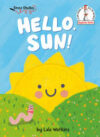
Norbit (a cheerful pink earthworm in a red bandana) and Sun are friends, enjoying their day together with other playmates (teddy bear, chick, ladybug, butterfly) in this title from Seuss Studios, an imprint, where “emerging authors and illustrators” create beginner books, using “never-before-seen” images by Theodor S. Geisel as inspiration.

Readers learn about different ways to enjoy time outside while practicing reading skills with the repetitive sentences (“I can . .. “, “We can . . . “) and (mostly) one-syllable words.  The images are simple, lively and bright; the characters are smiling and rosy-cheeked as they sing. dance, swim and relish their time outside with enthusiasm.

Recommended for public and school library collections.

Deanna Contrino, SLMS
K-2 Resource Librarian, Scarborough Schools

three-stars

The Faerie Isle: Tales and Traditions of Ireland’s Forgotten Folklore

The Faerie Isle: Tales and Traditions of Ireland’s Forgotten FolkloreThe Faerie Isle: Tales and Traditions of Ireland’s Forgotten Folklore by Dermot Flynn, Síne Quinn
Published by Candlewick Press on February 4, 2025
ISBN: 1536240710
Genres: Fairy Tale, Non-Fiction
Format: Nonfiction
Source: MSL Book Review
Goodreads
four-stars

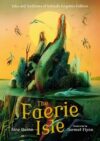
The cover of The Faerie Isle: Tales and Traditions of Ireland’s Forgotten Folklore is a good indicator of its content, if the reader is paying attention. The mermaids and water horses look enchanting but also like they might have something unsavory in mind for people who mistake them for the Disney-fied fairy tales. These creatures may not wish you well.

In this collection of informational spreads and tales of sixteen Faeries from Irish folklore, Síne Quinn shares stories (the King of the Cats) and informational spreads about characters you thought you were familiar with, and leans in on the ominous and sinister. There were many Faeries I had never heard of (like the Sheerie – malicious faeries who may lead travelers to their death). The writing style is conversational and cautionary.  The longer format (80 pp.) and tone of this book makes it just right for middle-grade readers who are looking to go deeper and darker into faerie stories.

The mostly muted and shadowy illustrations contribute to the book  — mysterious, entrancing, moody. Occasionally the design of the book ( dark print on dark pages) makes it more difficult to read but those looking for a spooky fix will not be deterred.

It must be said that Faeries are not all bad. The author recommends that the best way to protect oneself from faerie mischief is to be “kind, generous, good to animals and those around you”. Recommended to lift the tenor of a typical Halloween display. Reading aloud from a selection within the book may pique interest in its subject. Recommended for libraries where there is an interest in Faeries.

Deanna Contrino, SLMS
K-2 Resource Librarian, Scarborough Schools

four-stars

Murray and Bun!: Murray the Knight

Murray and Bun!: Murray the KnightMurray the Viking (Murray and Bun!) by Adam Stower

Published by Random House Children's Books Genres: Juvenile Fiction / Action & Adventure / General, Juvenile Fiction / Comics & Graphic Novels / Humorous
Format: Graphic Novel
Source: MSL Book Review
Goodreads
five-stars

This is the second early chapter book in a series starring Murray (a cat who loves routine, creature comforts, and predictability). Each story starts with a preamble explaining that the “rubbish” wizard Fumblethumb creates disasters of a magical kind that make Murray’s life interesting, including turning a frosted bun into a bunny named Bun and enchanting Murray’s cat flap so that it leads to an adventure in another realm, instead of a relaxing stroll in the garden.

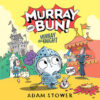
As Murray and Bun leave through the cat flap, there is a “Pa-Poof!” and they are transported to a medieval castle with some very curious characters, including the grumpy Princess Rubytoes and Sir Nasty — a dastardly knight, complete with villainous mustache. We learn that Princess Rubytoes is surly because she will be forced to marry Sir Nasty, even though she and the gardener, Muddy Michael, are in love, unless someone steps in. Because of a misunderstanding of the word “joust”, (Murray believes it involves trampolines, funny hats and raspberry tarts), Murray volunteers to help.

Many hilarious antics and unexpected events lead to Murray winning the joust, saving the day and being feted as a hero, as in the first book (Murray the Viking), but alas  Murray will miss out on the feast (again).

Readers looking for series with fast-paced action and humor will snap this up — the cover is attractive, the humor is immediately apparent. (I have labeled it a “graphic novel”, but it is more of a heavily illustrated story, like The Bad Guys series.)  Murray and Bun are goofy and adorable. The language is witty, cheeky, and dynamic. It would make a boisterous read-aloud.

Highly recommended for public and school libraries.

Deanna Contrino, SLMS
K-2 Resource Librarian, Scarborough Schools

five-stars

Two-Headed Chicken: Chaos in the Cosmic Library

Two-Headed Chicken: Chaos in the Cosmic LibraryTwo-Headed Chicken: Chaos in the Cosmic Library by Tom Angleberger
Series: Two-Headed Chicken #3
Published by Candlewick Press on 9/23/25
ISBN: 1536237051
Genres: Humor
Format: Graphic Novel
Source: MSL Book Review
Goodreads
four-stars

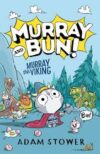
The fun and randomness of the time traveling two-headed chicken is back in the third graphic novel in this series.  Their archnemesis, a shape-shifting moose, is still after them, eager to catch them so he can fry them!  To escape, they travel to the cosmic library, where they jump in and out of (parodies of) beloved children’s books like Winnie the Pooh, Charlotte’s Web, Diary of a Wimpy Kid, and more.  The graphic novel is completely absurd, which will no doubt appeal to readers who gravitate to humorous books.  The colors are bold and vibrant and help to create the fun energy and quick pace of this book.  Readers do get small breaks along the way as they encounter mazes, quizzes, seek and finds, and drawing activities throughout this book.  Given the large text and crazy content, this series is best suited for elementary school readers. Readers who enjoyed the first two graphic novels in this series will certainly devour this one as well.

Reviewed by Lindsay Varnum, Orono Public Library

four-stars

Murray and Bun!: Murray the Viking

Murray and Bun!: Murray the VikingMurray the Viking (Murray and Bun!) by Adam Stower
Published by Random House Children's Books Genres: Humor, Juvenile Fiction / Comics & Graphic Novels / Humorous
Format: Graphic Novel
Source: MSL Book Review
Goodreads
five-stars

This is the first book in a series starring Murray (a cat who loves routine, creature comforts, and predictability). Unfortunately, Murray lives in a house with an inept wizard by the name of Fumblethumb,  prone to mistakes of a magical kind that make Murray’s life interesting. He turns Murray’s “last and best” frosted bun into a bunny named Bun and enchants Murray’s cat door, so that one never knows if there is a relaxing stroll through the garden on the other side or an unwanted (if you’re Murray) exploit in another realm.

In this outing, Murray and Bun, his adventure-loving sidekick, are transported to the land of Vikings. The Vikings need Murray to solve the problem of the trolls, who they believe have eaten their leader, Eggrik. The trolls turn out to be delightful, friendly, and willing to share food, but they also have a problem they hope Murray can solve — a scary, hairy, very stinky something is in the wood, causing them a lot of distress. Intrepid readers will jump ahead and guess that the stinky, hairy something is Eggrik, and they will be right.

Eggrick is very stinky and very lonely, but he has a bigger problem that only Murray, through his unique brand of skills, can fix. Fix it he does and returns Eggrik to the Vikings. There is a celebration! There is a feast about to start! There is Murray, whisked magically back to his own cat flap place and time, and disgruntled about missing the feast.

Readers will learn that amazing adventures await when you are willing to step outside your comfort zones. Lots of jokes, visual and otherwise; cartoonish line drawings on every page. (I have labeled it a “graphic novel”, but it is more of a heavily illustrated story, like The Bad Guys series.)  Murray and Bun are goofy and adorable. This is for students who like theirs stories with lots of fast-paced action, adventure and humor.  The language is witty, cheeky, and dynamic.

Children of all ages will laugh at Murray’s obsessions with food, and his solutions to hairy problems. Readers will enjoy “Bun’s Bonus Bits” in the back matter, including “How to Draw Murray” and a “Family Album”. This would be a great gateway series to get students hooked on other magical adventure series with lots of humor, and would make for a rollicking read-aloud.

Highly recommended for public and school libraries.

Deanna Contrino, SLMS
K-2 Resource Librarian, Scarborough Schools

five-stars

Squash, the Cat: Stuck in the Middle

Squash, the Cat: Stuck in the MiddleSquash, the Cat: Stuck in the Middle by Sasha Mayer
Published by Random House Children's Books on February 4, 2025
ISBN: 0593566564
Format: Picture Book Fiction
Source: MSL Book Review
Goodreads
four-stars

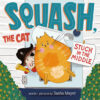
Squash is a very orange, very round cat living the good life with his best friend, Maggie — a wildly imaginative,  energetic girl with curly red hair, fair skin and freckles. Squash’s days involve a lot of napping and sitting happily on the sidelines while Maggie partakes in a wide variety of adventures. The best part of the day for Squash, is bedtime when he and Maggie fall asleep in “a cozy Squash-Maggosh circle”.

Mayer depict the coziness of Squash’s existence and the excitement of Maggie’s with dynamic, colorful illustrations that convey what’s happening in the text. As in any story of contentment, an antagonist must enter the picture, to keep things interesting. In this case, Pirate Lou, a swashbuckling “pillow pirate” stuffie, is a willing participant in all of Maggie’s most active adventures.

Squash is still on the periphery but it feels much less comfortable with Pirate Lou horning in. And now bedtime is ruined. While Maggie is willing for all three friends to share the bed, Squash with his generous contours, falls gracelessly to the floor and decides to “lose” Lou while Maggie sleeps. Unfortunately, Maggie discovers Squash in the middle of his nefarious act and banishes him from the bed.

Squash, determined to regain his spot in the bed, attempts, for a second time, to remove Pirate Lou from the scene. As he tries to get the plump pillow pirate out to the trash truck in the morning, they gets stuck half-in, half-out of the cat door. Readers will find Squash’s expressions as he tries to maneuver his way out of the predicament comical.

Poor Squash  is clearly worn out by all his failed machinations and capitulates to a nap, realizing that Pirate Lou is truly a comfy nap buddy. In the happiest of endings, the three individuals now become inseparable. Squash is still cheers on from the sidelines while Maggie and Pirate Lou play, but now his naps include Pirate Lou.

Stuck in the Middle is not an inventive story but it is enjoyable.  Recommended for public and school library collections.

Deanna Contrino, SLMS
K-2 Resource Librarian, Scarborough Schools

four-stars

A Summer Without Anna

A Summer Without AnnaA Summer without Anna by Kate Jenks Landry, Risa Hugo
ISBN: 1525310259
Genres: Family
Format: Picture Book Fiction
Source: MSL Book Review
Goodreads
four-stars

Junie is spending the summer without her older sister, Anna. Junie will be  with the grandparents in the country, while Anna and their parents remain in the city, promising to return when Anna is “well enough”. The nature of Anna’s illness isn’t mentioned, but we get the sense that it is something chronic and serious.

As her parents and Anna leave, Anna hands Junie a box containing her beloved, and previously off-limits camera, along with a note, “In case you find Edmund.” The camera is a source of connection, comfort, and distraction for Junie. The estrangement from her family and the worry about Anna are always present, but the camera It acts as her companion, forcing her to  focus on the natural world around her, as she looks for Edmund.

Junie is a pale young girl, often in green overalls, as she explores the meadow and the lake around her grandparents’ place. The illustrations done in gouache, colored pencils and soft pastels, are reflective of the feelings of anxiety and worry that Junie carries throughout the summer.

There are many small moments within the story, as Junie and her grandparents try to keep busy with pleasant tasks (minnowing, baking, swimming) but Anna’s absence, and the seriousness of her illness are keenly felt. Landry doesn’t shy away from difficult  subjects or emotions.

This is a story of a summer without  the companionship of a sibling, without knowing all is well. And yet, there is hope. Junie finds ways to quiet the worry she feels  in routine and enjoyable activities; she locates Edmund ( a giant snapping turtle), even as she is acutely aware that Anna isn’t there to see it.

And eventually, Anna gets well and Junie is reunited with her sister.  Recommended for picture book collections lacking titles discussing siblings’ feelings around chronic illness.

Deanna Contrino, SLMS
K-2 Resource Librarian, Scarborough Schools

four-stars