How to Hatch: A Gosling’s Guide to Breaking Free

How to Hatch: A Gosling’s Guide to Breaking FreeHow to Hatch: A Gosling's Guide to Breaking Free by Galia Bernstein, Sara Holly Ackerman
ISBN: 0593811062
Genres: Animals
Format: Picture Book Nonfiction
Goodreads
five-stars

How to Hatch: A Gosling’s Guide to Breaking Free by Sarah Holly Ackerman

How to Hatch is about the hatching process for goslings and balances scientific facts with beautiful and engaging pictures and manageable chunks of the process. Readers will appreciate learning about the process while also getting an inside peek into the inside of the shell. This would pair especially well with a biology unit, a unit on animals, or as a model for engaging non-fiction. This is a must-have book for libraries serving readers in grades 1-5 and is a five-star read for me.  Reviewed by Katy Jones, Gardiner Area High School Library, Gardiner

five-stars

To Walk the Sky

To Walk the SkyTo Walk the Sky: How Iroquois Steelworkers Helped Build Towering Cities – A Beautifully Illustrated History of Mohawk Skywalkers and Their Legacy by E B Lewis, Patricia Morris Buckley
on January 28, 2025
ISBN: 0063046970
Genres: Cultural / Native American, Non-Fiction
Format: Picture Book Nonfiction
Source: MSL Book Review
Goodreads
four-stars

Native Americans are widely known for their powerful connection to the Earth, however, this book sheds light on a different skill; their historical connection to the sky, and the man-made, steel structures that stretch up to meet it.

The book takes us through the history of a land deal made between the Mohawk tribe and the Dominion Bridge Company in exchange for the opportunity for Mohawk Natives to take jobs working for them. To the construction bosses’ surprise, the Mohawk Natives appeared comfortable atop the tallest beams and even delighted moving among them like tightrope walkers. These daredevils became famously known as Skywalkers.

This picture book is an important homage to the Skywalkers and the pride in their unique ability to defy gravity. It includes the devastating collapse of the Quebec Bridge in 1907 and the tragedy of the Twin Towers in NYC. These tragedies did not defeat their passion to walk among the clouds and we have a long list of important structures throughout the United States that are still standing strong and continue to be built today. E.B. Lewis’ watercolor illustrations add to the beauty of the book’s message. A great addition to any library’s non-fiction section. Recommended for ages 6-12

Reviewed by Gia Charles, Patten Free Library, Bath


four-stars

Your Crown Shines

Your Crown ShinesYour Crown Shines: For Ketanji Brown Jackson and You – A Poetic Love Letter and Picture Book Celebrating Black Women Pioneers by Dare Coulter, Jessica Care Moore
ISBN: 0063311399
Genres: Inspiration, Biography/Autobiography, Cultural / African American
Format: Picture Book Nonfiction
Goodreads
three-stars
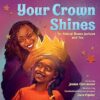
Biographical/inspirational picture book, Your Crown Shines: for Ketanji Brown Jackson and You, by jessica Care moore, lights a fire under girls of color to dream big and reach high. We are reminded that “Being the first isn’t the easiest thing to do when there is no one else who looks like you.” True enough, but while the message is a crucial one, the text falls short of the glory the author wishes to convey upon Ketanji Brown Jackson. Some pages rhyme, some are free verse, and some prose, leaving the reader a bit uncertain on how to read each page. The illustrations are vibrant, featuring a young KBJ interacting with her family, her heroes, and lots of books. Most of the pictures include an element of text from the body of KBJ’s work in the Supreme Court, which is a nice touch.
The text and style of the book suggest it’s meant for ages 4-8, but they may need a brief explanation of KBJ’s accomplishments for the connection between “Ketanji Brown Jackson and You” to make sense to that age group. School and classroom libraries might consider adding it to their collections, especially for units focusing on the accomplishments of BIPOC, women, and others overcoming obstacles to achieve amazing things.
Reviewed by Beth Almquist, Lewiston Public Library
three-stars

Extreme Places: The Most Remote Homes on Earth

Extreme Places: The Most Remote Homes on EarthExtreme Places: The Most Remote Homes on Earth by Giles Laroche
Published by Clarion Books on September 30, 2025
ISBN: 0358690188
Genres: History, Informational, Non-Fiction
Format: Picture Book Nonfiction
Source: MSL Book Review
Goodreads
four-stars

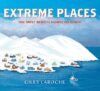
Journey around the world to some of the most challenging and remote spots on Earth in this stunningly illustrated book that celebrates human ingenuity, community, and the people who call these places home. Laroche’s cut-paper collage artwork illustrations are stunning. Using a consistent textual format which includes a synopsis, location, who lives here, fascinating fact, and adapting to extremes, he  suggests what it takes to survive there. A list of places included: Tristan da Cunha; Sahara Desert; Mentawai Islands; Verkhoyansk, Siberia; Isla Navarino; Spiti Valley; Goreme, Cappadocia; Floating Islands of the Uros; Atafu Atoll; Gobi Desert; Agoashima ;Socotra; and, Atka, Alaska. A map of the world at the end of the book indicates where all of these places are located. Give this book to anyone interested in geography or as a model of beautiful collage artwork.

Barb Rehmeyer, Liberty Library

four-stars

SPARK: Jim West’s Electrifying Adventures in Creating the Microphone

SPARK: Jim West’s Electrifying Adventures in Creating the MicrophoneSpark: Jim West's Electrifying Adventures in Creating the Microphone by Ainissa Ramirez
Series: Black Inovators
Published by MIT Kids Press on October 21, 2025
Genres: Biography/Autobiography, Cultural / African American, STEM
Format: Picture Book Nonfiction
Source: MSL Book Review
Goodreads
five-stars

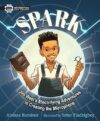
The first book in the MIT Kids Press Black Innovators series. This picture book biography is for science lovers. Author Ainissa Ramirez shares the story of Jim West who patented the foil-electret microphone, a unit integral to everything from cell phones to hearing aids. Her explanations of the science are in-depth and sure to appeal to STEM-minded kids. Growing up on a farm, West had a compulsion to take things apart to see how they worked and had a fascination with electricity. He studied science in college, where he was one of only two Black students, and then went on to work at Bell labs. West’s advocacy for more diversity in the technology field paved the way for many scientists of color to follow their interests and curiosity. Back matter provides an author’s note, a time line, a bibliography, and more information on the life and work of Jim West. Ages 8-12.

Nominated for Cream of the Crop

Barb Rehmeyer, Liberty Library

five-stars

Follow That Map!: A First Book of Mapping Skills

Follow That Map!: A First Book of Mapping SkillsFollow That Map!: A First Book of Mapping Skills (Exploring Our Community, 1) by Scot Ritchie
Series: Exploring Our Community
Published by Kids Can Press ISBN: 1554532744
Genres: Animals, Informational, Realistic Fiction
Format: Picture Book Fiction, Picture Book Nonfiction
Source: MSL Book Review
Goodreads
three-stars

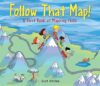
Book 9 in series “Exploring Our Community.” This first paperback edition was published in 2025, but the hardcover was published in 2009. Sally and her four friends are looking for her missing cat and dog. The simple text is accompanied by a colorful map that uses symbols to identify places such as the library,  park, airport, country, and eventually across the world and the solar system. On the way, a different type of map is featured and explained. The information is solid and works better as an informational book than story. Although, readers will enjoy looking for the animals who are hiding somewhere in each map. Instructions for creating a map of a bedroom are included in the back of the book. Ages 4-8.

Barb Rehmeyer, Liberty Library

three-stars

I am my Name

I am my NameI Am My Name: A Girl's Journey to Finding Her Cree Family by Judith Henderson, Na'kuset, Onedove
ISBN: 0593648765
Genres: Cultural / First Nations, Non-Fiction
Format: Picture Book Nonfiction
Goodreads
five-stars

This is an eye-opening autobiographical story of how a young Cree girl was removed from her family without consent during Canada’s Sixties Scoop, which took Indigenous children from their families, and fostered or adopted them out to primarily white families. She was put in a new home and given a new name, completely losing her identity and missing her biological sister. While she finds some joy in her childhood, and develops a special bond with her adopted grandmother “Bubbie”, she longs to know her true identity. After she is grown, Bubbie helps her find her biological sister. Finally, reconnecting with her Indigenous roots, she is given a Spirit name by an Elder. She is Na’kuset, or the Sun. The life-like illustrations carry you on this emotional journey with Na’kuset. This is an important story for any collection, and particularly for education around colonization. Recommended for ages 6 to 9 (1st to 4th Grade). Cream of the Crop nominee.

Reviewed by: Jenn Mead, Charlotte Hobbs Memorial Library, Lovell

five-stars

This is How a Ball Rolls: The Science of Wobbling, Bouncing, Spinning Balls

This is How a Ball Rolls: The Science of Wobbling, Bouncing, Spinning BallsThis Is How a Ball Rolls: The Science of Wobbling, Bouncing, Spinning Balls by Heather Tekavec, Suharu Ogawa
Published by Kids Can Press on 2025
ISBN: 1525309684
Genres: Non-Fiction
Format: Picture Book Nonfiction
Source: MSL Book Review
Goodreads
four-stars

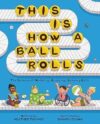
Tekavec and Ogawa introduce readers to  the science behind how different kinds of balls interact with the world all around in an original way that will create understanding and interest in the subject. Presenting twelve different balls  (in order from smallest to largest) through a series of “tongue-twisting brainteasers”, readers may guess at the ball being described:

“(A) little ball —
A Teeny ball —
A glassy, smooth, and swirly ball . . . “

On the following page is a double-page spread of children of all shapes, sizes, colors, and physical abilities interacting with the ball(s) in question (in this case, marbles). Each section also contains an inset that describes the physical qualities unique to each ball and its function. The writing is playful and dynamic, giving a sense of each orb through descriptions that are fun to read aloud.

The illustrations are equally energetic, with bright, colorful action filling each page. Each sphere is shown in its natural environment (tennis balls on tennis courts, a baseball landing in the stands, etc.). Readers keeping their eyes on the ball  will notice the same characters returning from scene to scene, including an animated ball of yarn.

The back matter shares ball trivia linked to scientific concepts such as “drag force”,  that are hinted at in the text but never explicitly stated. This seems like a missed opportunity to help readers connect the dots between a scientific concept in theory and in practice.

This would be a great read-aloud during  elementary school science units around physics or materials,  introducing ideas and creating opportunities to discuss the ideas in practice, and have a ball doing it. Recommended for public and elementary school libraries.

Deanna Contrino, SLMS
K-2 Resource Librarian, Scarborough Schools

four-stars

The House on the Canal

The House on the CanalThe House on the Canal: The Story of the House that Hid Anne Frank by Britta Teckentrup, Thomas Harding
ISBN: 1536240702
Genres: History, Non-Fiction
Format: Picture Book Nonfiction
Source: MSL Book Review
Goodreads
five-stars

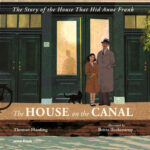
While there are many books about Anne Frank and her diary, this is a story about the extraordinary house and the annex behind it that hid her.

In the city of Amsterdam, next to a canal and a church, is a slender building with a green front door known as “anne frank haus,” which is the official museum of Anne Frank. This picture book takes its readers through the entire history of the space: from the peaceful marshland, to the stonemasons who stacked the foundation, and then the addition of the annex on the back.

Families cycled in and out of the house. There were plagues, parties, manufacturing, horse stables, and even a fire.  It would take until 1940, when Otto Frank moved his businesses into the building, that would make it the impactful destination that it is today. Britta Teckentrup, who is often known for her die-cut shapes and cheery illustrations, really hits the mark with this very different piece of work. The passageways of the house and the map of Amsterdam are so visually interesting with lots of shape-framing and lovely muted colors. Thomas Hardings’ writing is incredibly evocative and takes the reader right into the experience of being in the house, hearing the bells ring in the church square, and up to what the house is today; a museum and education center. There is thorough back matter to fully understand each era of the house, which was just enough information. Overall, this book is expertly made and highly encouraged for upper elementary collections. Ages 7+

Recommended for Cream of the Crop

Reviewed by Gia Charles, Patten Free Library, Bath

five-stars

Let It Shine: A Celebration of You

Let It Shine: A Celebration of YouLet It Shine!: A Celebration of You by Carole Boston Weatherford, Tequitia Andrews
Published by Crown Books for Young Readers on January 20, 2026
ISBN: 0593805755
Genres: Cultural / African American
Format: Picture Book Nonfiction
Source: MSL Book Review
Goodreads
three-stars

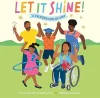
Using the song “This Little Light of Mine” as inspiration, the book uses everyday moments and historical figures to encourages readers to “make a difference.” This is more of an inspirational book to give as a present for graduation than a meaningful story for children. All the characters are brown skinned and notables such as Rosa Parks, Martin Luther King, Jr., Shirley Chisholm, Harriet Tubman, and Frederick Douglas are used as examples, but there is no explanation as to why they are inspirational. It is assumed that the reader will know. The refrain of “Let it shine Let it shine Let it shine” is used repeatedly throughout and creative additional verses are introduced to the well-loved song. The song has been interpreted a number of times. (There is a list of people who have recorded the song in the back of the book.) This book is available as an audiobook, and I think it would be interesting to listen to that rendition. As a paper book form, I prefer the Ashley Bryon version.

Barb Rehmeyer, Liberty Library

three-stars